1
Reserve your share
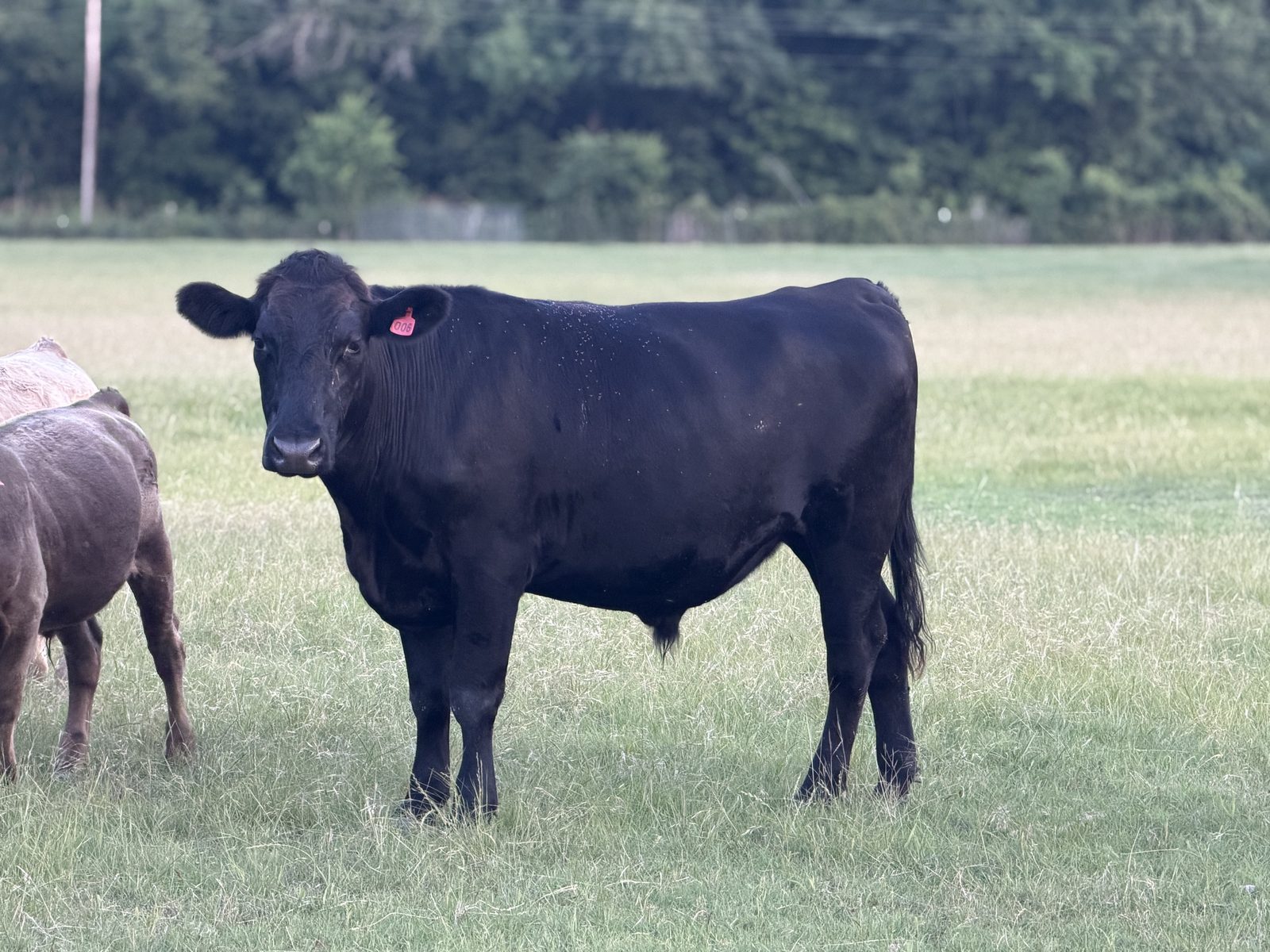
Tell us the size you want — quarter, half, or whole — and put down a deposit. Your share is tied to a specific animal from our herd, not a pool of "product."
Beef Shares
Texas raised grass fed beef from one real family ranch in Van Alstyne — serving families from Sherman and McKinney to North Dallas. We're not an aggregator or a beef "brand": you buy a share of one animal we raised, and you pick it up here, at the ranch it came from.
Simple On Purpose
A beef share is straightforward: you reserve a quarter, half, or whole animal with a deposit; we raise it on Texas pasture and handle processing at our partner butcher; then you pick up your custom-cut, vacuum-sealed beef at the ranch. That's the whole program — three steps, no subscription, no middlemen.
Tell us the size you want — quarter, half, or whole — and put down a deposit. Your share is tied to a specific animal from our herd, not a pool of "product."
We raise your animal patiently on Texas pasture, then it's processed at our partner butcher. You fill out a cut sheet — steak thickness, roasts, ground — and we'll walk first-timers through every line.
Bring coolers to Van Alstyne and load up a freezer full of vacuum-sealed beef. You'll see the pastures your beef came from and shake the hands that raised it.
Why Buy Direct
No scare tactics — just the documented reasons more Texas families are buying beef straight from a ranch. Every one of these is public record. And every one has the same answer: know exactly where your beef comes from.
The U.S. cattle herd is the smallest since the 1950s and retail beef has set record prices year after year — ground beef has passed roughly $6.70 a pound nationally, with analysts not expecting relief for years.
Our answer: a share locks one transparent, blended per-pound price across every cut in the animal — ribeyes and ground at the same rate — set when you reserve, not when the market spikes.
Commodity ground beef blends trim from many animals across many sources — even multiple countries — which is why a single contamination event can trigger a recall across dozens of states, as recent multi-state recalls keep showing.
Our answer: your ground beef comes from one animal — the same one your steaks came from — processed in a small batch at a local butcher. We can tell you the animal, the pasture, and the processing date.
For decades, imported beef could legally wear a "Product of USA" label after mere repackaging — and most "grass-fed" beef in U.S. stores was imported. A new federal rule finally closed that loophole in 2026, but it's voluntary: packers can simply drop the label. Meanwhile a record share of the beef in American stores — roughly one pound in six — is now imported.
Our answer: you don't need a label when you have an address. Our cattle are born, raised, and finished on our ranch in Van Alstyne, Texas, and processed locally. Zero shipping containers. Come see the pasture.
About 85% of U.S. beef is processed by just four companies — an industry now under federal investigation over pricing practices, with two of the four having paid millions to settle price-fixing claims (without admitting wrongdoing). Between you and the animal stands a system built for volume, not visibility.
Our answer: there is no system between us. One family, one traceable animal, one local butcher, one handshake at pickup. That's the entire supply chain.
Pick Your Size
| Share size | Take-home beef | Freezer space | Feeds | Price |
|---|---|---|---|---|
| Quarter | ≈ 85–110 lbs | ≈ 3 cu ft | Couple / small family | Request a quote |
| Half Most popular | ≈ 170–220 lbs | ≈ 5–7 cu ft | Family of 3–5 | Request a quote |
| Whole | ≈ 350–440 lbs | ≈ 10–13 cu ft | Big family / split it | Request a quote |
The right first share. A quarter cow for sale here in North Texas gets you roughly 85–110 pounds of finished beef — a true cross-section of the animal with steaks, roasts, and plenty of ground. It fits in about 3 cubic feet, so most families don't even need a new freezer.
The best value per pound and our most popular size. A half cow yields roughly 170–220 pounds — a full range of premium Wagyu cuts with the steak thickness and roast sizes you choose. Plan on a small dedicated chest freezer (5–7 cubic feet). Many families split a half with relatives or neighbors.
Every cut the animal offers at the lowest per-pound cost — roughly 350–440 pounds of beef, a year of dinners for a big household, or an easy four-way split between families. You'll want a large deep freezer (10–13 cubic feet), and you get priority on future harvests.
Every share is custom cut to your sheet and delivered vacuum-sealed and frozen. See every beef cut in your share →
Honest Math
This is where most first-time buyers get confused — and where less-honest sellers let them stay confused. It's actually simple. Hanging weight is what the animal weighs after initial processing, typically about 60% of live weight. Share prices are quoted per pound of hanging weight, plus butcher processing.
Your take-home weight — the boxed, vacuum-sealed beef in your freezer — is then roughly 55–65% of hanging weight, because bone and trim come off during butchering. Nothing is "missing"; that's just what butchering is.
For context, Wagyu-cross half shares in Texas typically land in the $2,600–$3,600 range all-in. Divide by ~200 pounds of take-home beef and you're paying one blended rate for everything — including the ribeyes and filets that run $20–30 a pound at retail. Request a quote and we'll walk you through our current numbers line by line.
Worked example — a half share
The Beef Itself
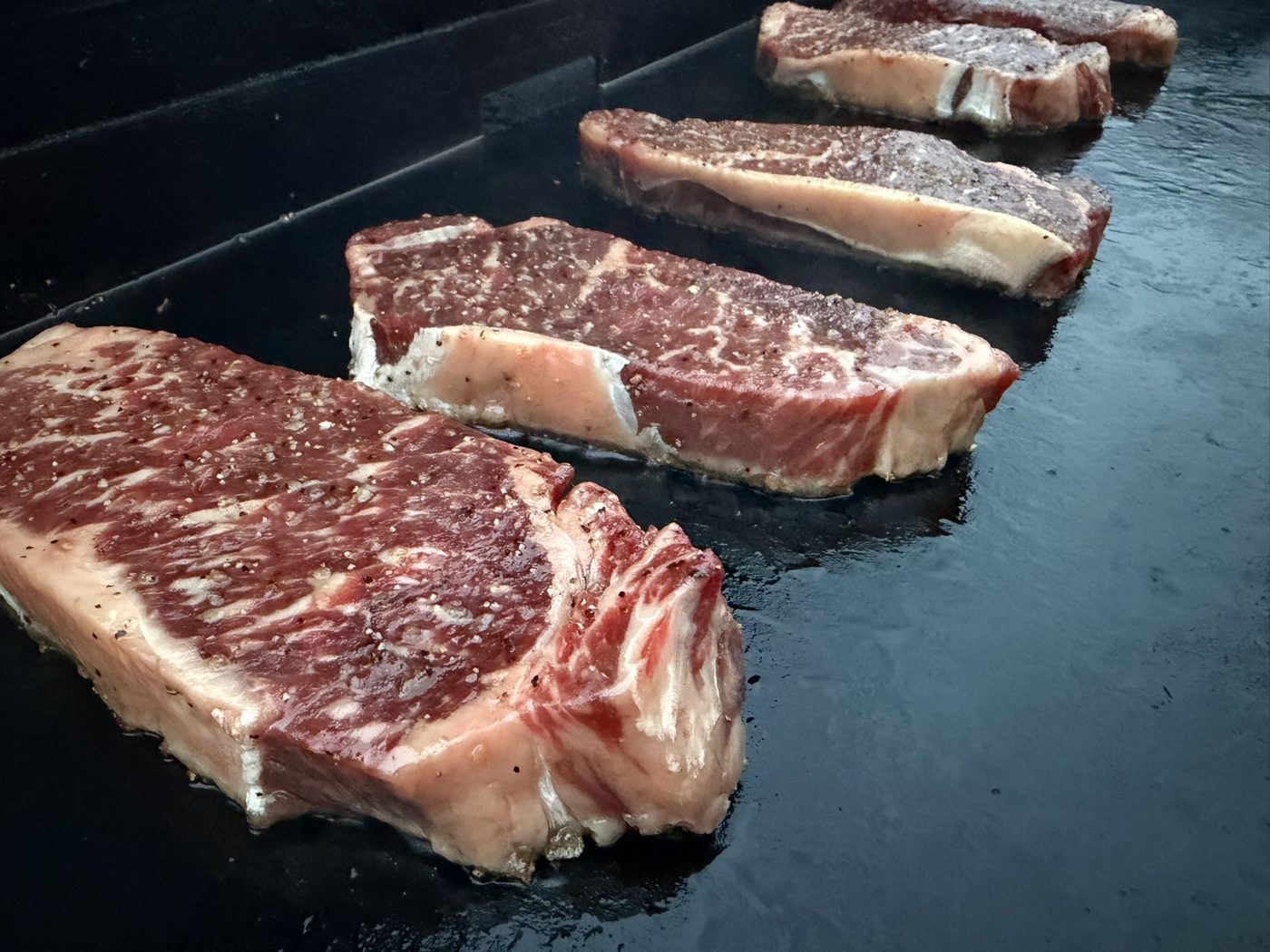
F1 Wagyu genetics deposit fine, even marbling that ordinary cattle can't — and grass feeding gives that marbling a deeper, beefier flavor than feedlot beef. Registered Wagyu bloodlines on one side, Texas pasture on the other: tenderness without the feedlot.
It's a genuinely different eating experience than commodity beef, and a more honest one than "wagyu-style" marketing. What is F1 Wagyu? The full story →
Come See Us
Rigid Ranch sits in Van Alstyne, Texas (75495), right on the Grayson–Collin county line along US-75. If you've been searching for grass fed beef near McKinney, Sherman, Anna, or Melissa — we're the ranch down the road, not a warehouse.
Pickup day is half the fun: you'll load coolers of vacuum-sealed beef, see the pastures, and meet the family — and the herd — behind your freezer full of beef. That's a trip no grocery run can match.
Good Questions
In Texas, Wagyu-cross half shares typically land in the $2,600–$3,600 range all-in, depending on hanging weight and processing choices. The math is hanging weight × price per pound, plus processing. Spread over ~170–220 lbs of take-home beef, every cut — ribeyes included — comes out to one blended per-pound rate. Request a quote for our current numbers.
Roughly 85–110 pounds of finished, packaged beef — a real cross-section of the animal: steaks, roasts, and ground, cut to your sheet. For a couple or small family, that's several months of dinners.
Figure one cubic foot per 35–40 pounds of packaged beef. A quarter needs about 3 cubic feet (fits most existing freezers); a half needs 5–7 cubic feet (a small chest freezer); a whole wants a 10–13 cubic foot deep freezer. Tell us your setup and we'll help you size your share.
A deposit reserves your share of a specific animal. The balance is based on actual hanging weight plus processing, invoiced when your beef is ready. Then we schedule pickup at the ranch in Van Alstyne — bring coolers, we'll help load. No subscriptions, no auto-ship, no fine print.
Grain pushes maximum marbling scores; grass feeding trades a little of that for deeper, beefier flavor — and F1 Wagyu genetics still deposit real marbling on pasture, which is exactly what the breed is famous for. We think it's the best of both. Read the grass-fed vs. grain-fed Wagyu trade-offs →
Pickup at the ranch, on purpose. It keeps your cost down — and honestly, we want you to see the place. Beef that ships in an anonymous box is exactly what we're the alternative to. We're 10–20 minutes from Anna, Melissa, Sherman, and McKinney, and under an hour from most of North Dallas.
Ribeyes, NY strips, filets, sirloin, brisket, short ribs, roasts, and plenty of ground — the whole animal, not just the highlight reel. Your cut sheet decides steak thickness, roast sizes, and ground ratios, and we'll help you fill it out. See the full Wagyu beef cuts guide →
Hanging (carcass) weight is what the animal weighs after initial processing — about 60% of live weight. Share pricing is quoted per pound of hanging weight; your boxed take-home beef is then roughly 55–65% of that, depending on your cut choices, since bone and trim come off at the butcher. We put it in writing so there are no surprises.
Limited Each Season
We're a small family ranch and finish a limited number of animals each year. Tell us what you're looking for and we'll follow up with availability, current pricing, and next steps — no pressure, just a conversation.