The claim to question
"Wagyu" with no percentage, no sire, no paperwork — on a menu, a label, or a website. It can legally mean very little.
Beef Education
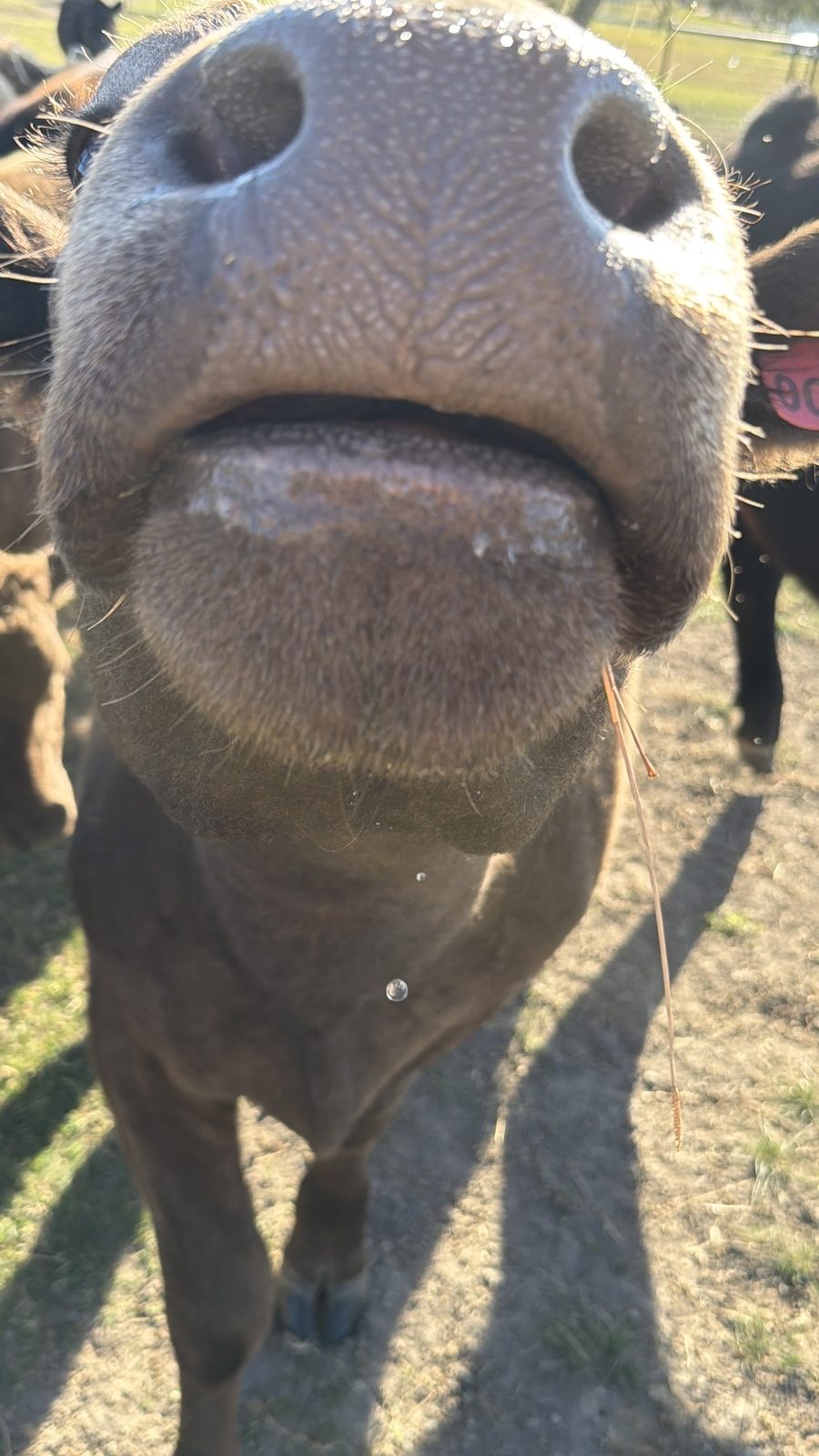
F1 Wagyu is the first-generation cross of a fullblood Wagyu bull with a quality base cow — a true 50% Wagyu animal. Most articles will tell you F1 means Wagyu × Angus. It doesn't have to. Here's the plain-spoken version of what the term means, what's real, and what it tastes like off Texas grass.
The Genetics
"F1" is a breeder's term for first generation — the very first cross between two breeds. In our case, a fullblood Wagyu bull with registered, documented bloodlines is bred to a quality, hardy base cow. The calf inherits 50% Wagyu genetics — including the genes behind Wagyu's famous fine marbling and tenderness.
You'll see this animal called a Wagyu cross, a Wagyu-Angus cross, or even "Wangus" when the mother is Angus — and much of what's sold as American Wagyu is exactly this kind of cross. The label matters less than the paperwork: what makes F1 real is a documented, registered Wagyu sire, not a word on a package.
Why cross at all? Because the cross is the sweet spot. Pure Wagyu is slow-growing and delicate to raise; a sturdy mother cow gives the calf the hardiness to thrive on open Texas pasture while the Wagyu side brings the marbling. It's much of the magic of Wagyu, in an animal a family ranch can raise honestly.
Registered Wagyu bull
Marbling & tenderness genetics
Quality base cow
Hardiness & pasture health
The result
F1 Wagyu — 50% Wagyu, built for Texas grass
Know What You're Buying
Honest framing: fullblood Wagyu is more marbled — and dramatically more expensive, richer than most people want for a Tuesday dinner. F1 is the practical middle: real Wagyu character, in portions and prices built for people who eat beef as dinner, not as a tasting course.
| Type | Wagyu genetics | Marbling | Richness | Price tier |
|---|---|---|---|---|
| Fullblood Wagyu | 100% | Extreme | A few bites at a time | $$$$ |
| F1 Wagyu What we raise | 50% (registered sire) | High & fine-grained | Dinner-plate rich | $$–$$$ |
| "American Wagyu" (typical) | Usually ~50% cross | High | Dinner-plate rich | $$–$$$ |
| Commodity Angus | 0% | Varies by grade | Standard | $–$$ |
And Wagyu vs. Angus? Our F1 cattle are literally both worlds in one animal — Wagyu marbling genetics over a hardy base. Wagyu fat is also chemically different: higher in monounsaturated fat and oleic acid, which is why it melts at a lower temperature and tastes buttery instead of waxy.
Buyer Beware
National chains have faced lawsuits over "Wagyu" menu items that were mostly ordinary beef, and restaurants have been caught passing off commodity steaks as premium Japanese imports. When a word sells at a premium, it gets stretched — that's the controversy in a sentence.
"Wagyu" with no percentage, no sire, no paperwork — on a menu, a label, or a website. It can legally mean very little.
A ranch that tells you the cross (F1, 50%), stands behind registered Wagyu genetics on the sire's side, and shows you the animal — not just the steak.
We know exactly where our beef comes from: our own high-quality animals with registered Wagyu genetics, raised on our pasture in Van Alstyne. Ask us anything — better, come see.
The Honest Trade-Off
Let's name the objection out loud: most Texas Wagyu is grain-finished on purpose, and some ranches will tell you grass-fed Wagyu is a mistake. Here's the honest version. Grain finishing does push the very top marbling scores — that's true.
It's also true that marbling is first a genetics story. Wagyu cattle deposit fine intramuscular fat in a way ordinary cattle simply can't, on any diet — that's what the breed is. Our F1 cattle lay down real, fine-grained marbling on Texas pasture, and grass feeding brings something grain can't: a deeper, beefier flavor with that buttery Wagyu texture.
So: grain-fed Wagyu chases the maximum score. Grass fed Wagyu in Texas — done patiently, with real genetics — chases the best-tasting beef you can raise honestly on grass. That photo is our proof; the think-pieces don't have one.
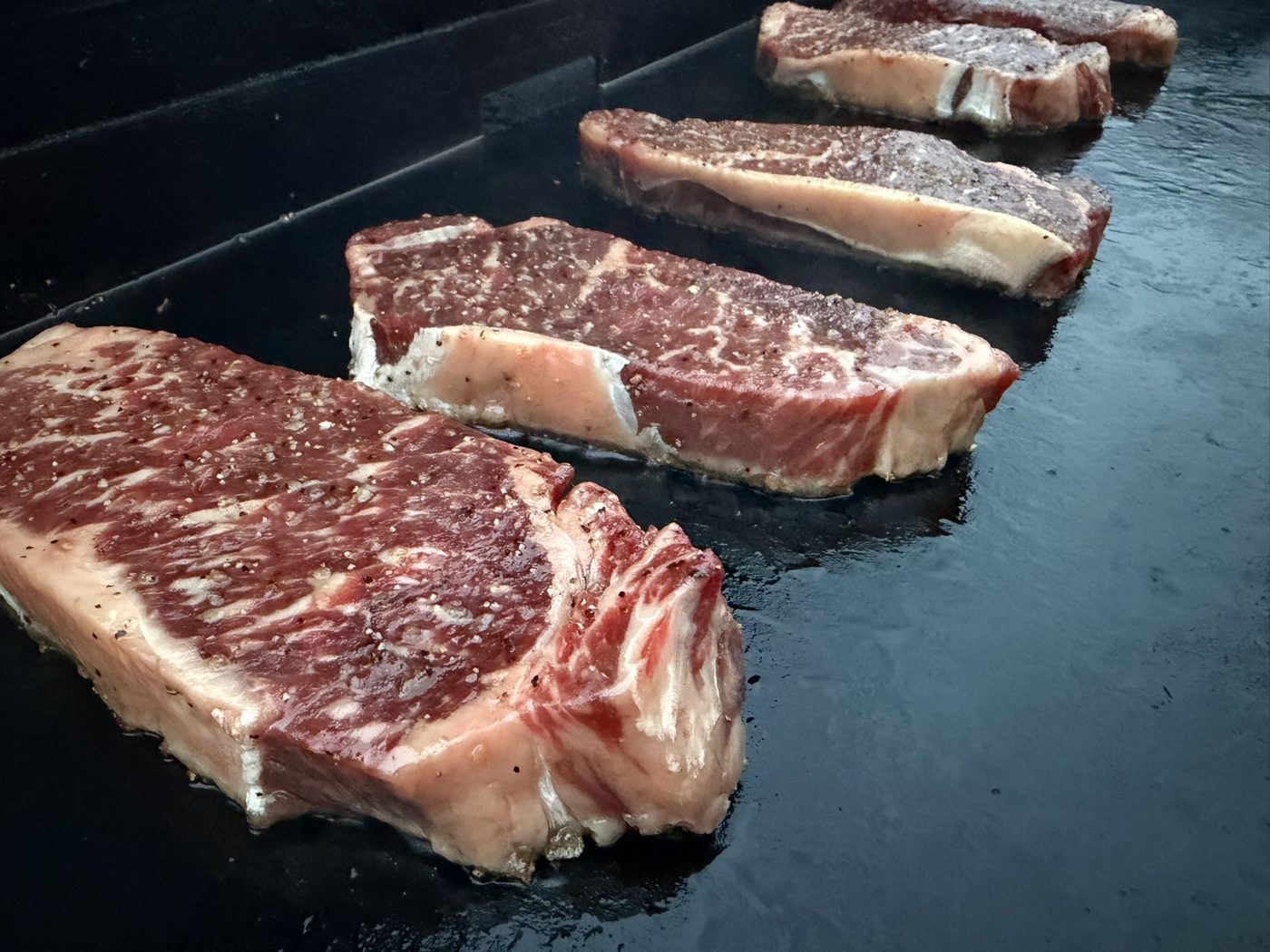
Our beef, not a stock photo
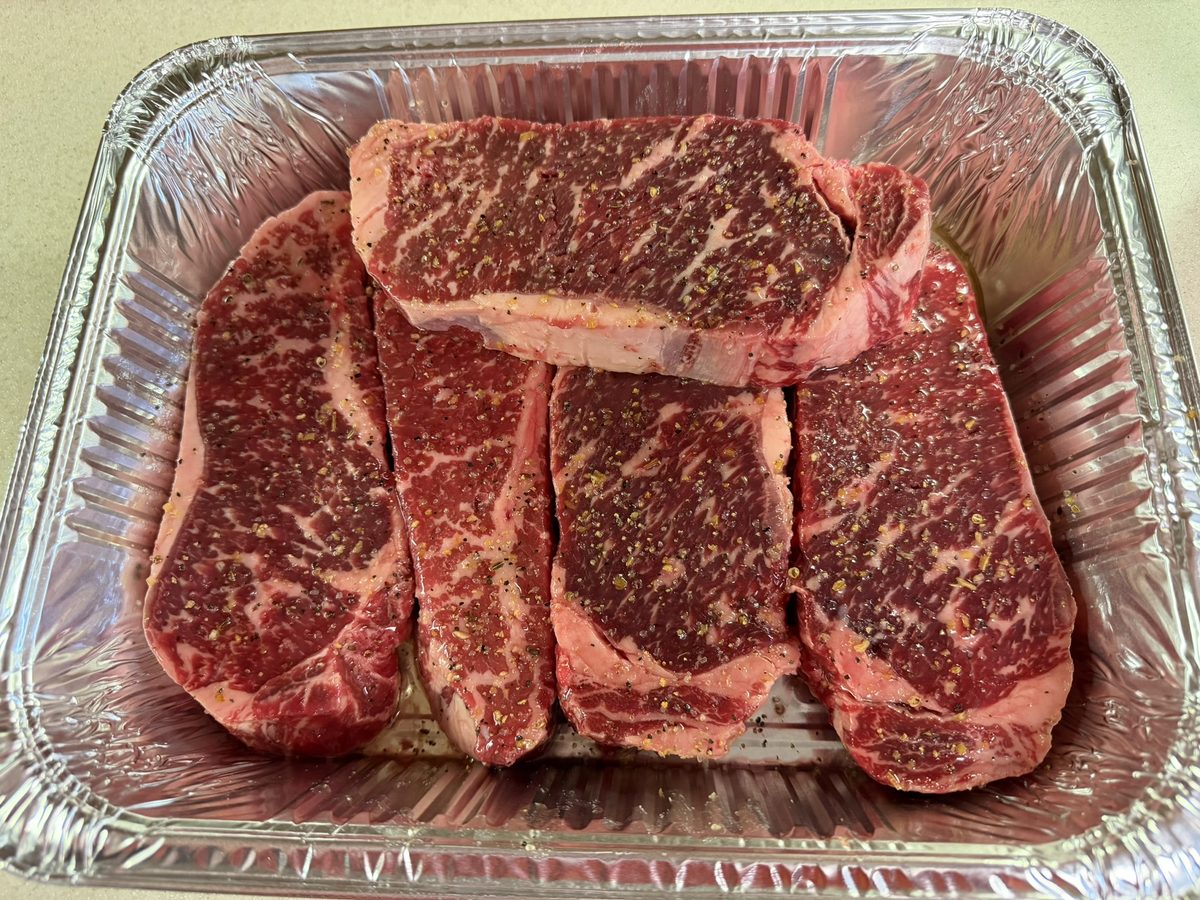
From Our Table
We eat this beef every week, so we'll tell you straight. If you've had lean grass-fed beef that was chewy or gamey — this isn't that. The Wagyu marbling keeps it tender and rich; the grass keeps the flavor deep and clean, beef that tastes like beef instead of like the feedlot.
Steaks want a hot sear and a soft touch — that low-melting Wagyu fat does the basting for you. Roasts and ground carry more flavor than any grocery equivalent we've cooked. See the Wagyu beef cuts guide → for cut-by-cut cooking notes.
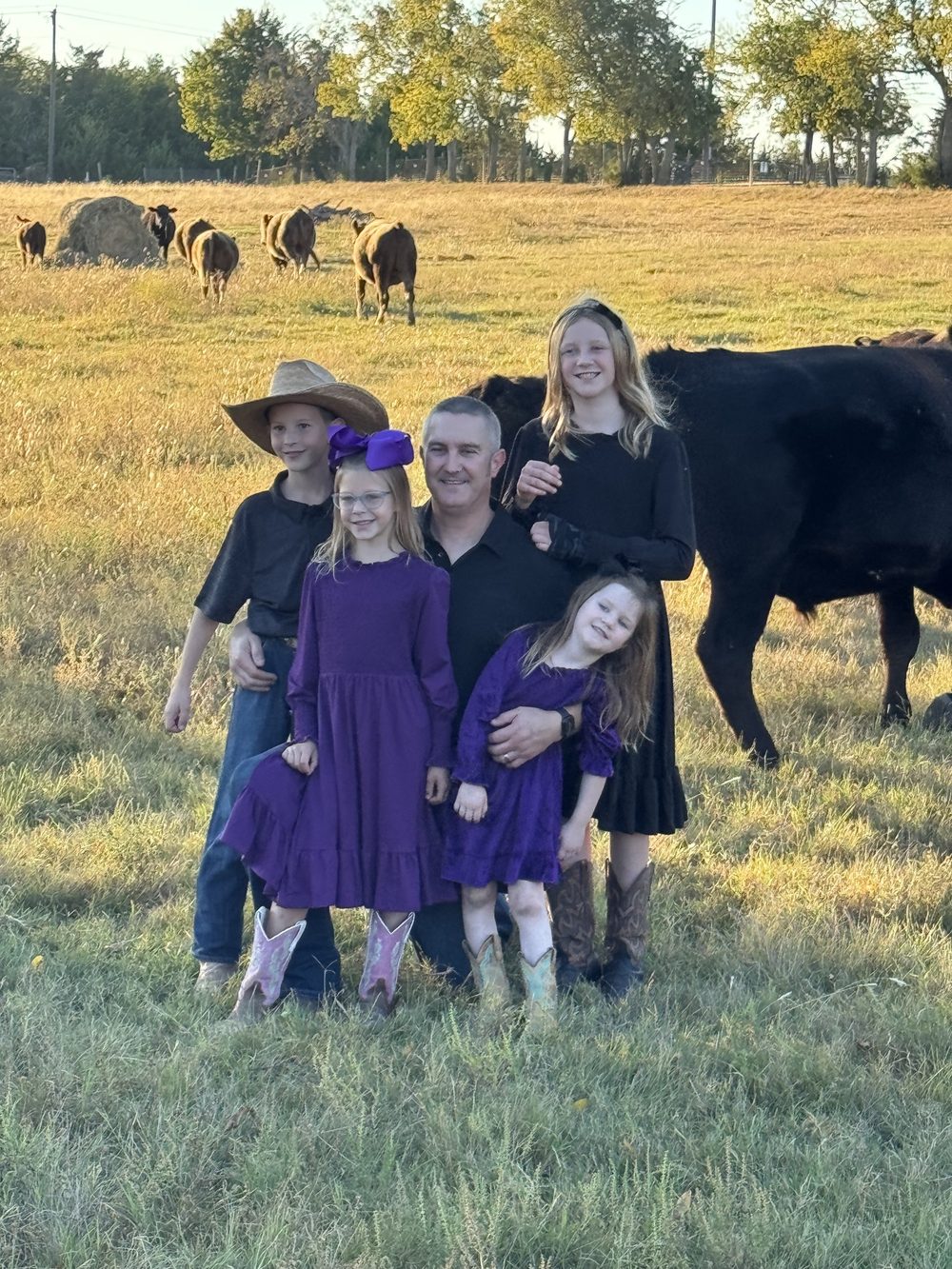
★ Van Alstyne, Texas
Raised by our family in Grayson County — come meet the herd at pickup.
Good Questions
Yes — it's a genuine 50% Wagyu animal from a documented first-generation cross. It isn't fullblood, and we'll never pretend otherwise. What separates real from marketing is the paperwork: our sires carry registered Wagyu genetics, and we're happy to show you.
Grain pushes the very top marbling scores — no argument. But marbling starts with genetics, and Wagyu genetics deposit fine marbling on pasture too. Ours trades a little peak score for a deeper, beefier flavor. We think that's the better steak; the marbling photo above is our evidence.
No — that's the most repeated myth in every article on the subject. F1 means first generation: a fullblood Wagyu bull over a quality base cow of any breed. Angus ("Wangus") is common, but hardy commercial cows make excellent mothers too. The Wagyu sire brings the marbling genetics either way.
We're ranchers, not doctors, so no medical claims here. What's descriptively true: Wagyu fat is higher in monounsaturated fat and oleic acid than typical beef fat — part of why it melts low and tastes buttery — and its richness means a modest portion satisfies.
Three ways: genetics bred for marbling instead of volume, a grass-fed life on Texas pasture, and a supply chain you can actually see — one animal, one family, one local butcher. How our beef compares to grocery beef →
Per meal, strongly yes: a share blends every cut into one per-pound price, so Wagyu ribeyes cost the same per pound as ground — a fraction of specialty-counter prices. And with retail beef at record highs, your price is set when you reserve, not when the market moves. Compare quarter, half & whole shares →
Taste It Yourself
Reserve a quarter, half, or whole grass-fed Wagyu beef share and judge our marbling with a fork. Pickup at the ranch in Van Alstyne — minutes from Sherman and McKinney.